← Home · Slopes & Walls

Slope Stability Analysis in West Valley City – Geotechnical Safety for Hillside Projects

Together, we solve the challenges of tomorrow.

LEARN MORE →

Our field crew arrives in West Valley City with a track-mounted CPT rig and digital inclinometers ready for steep terrain. Decker Lake’s shoreline deposits and the alluvial fans spreading east from the Oquirrh Mountains create layered soil profiles that demand precise shear strength measurement. We drill, sample, and log stratigraphy on-site—no guesswork. The data feeds into limit equilibrium models using Spencer and Morgenstern-Price methods. West Valley City requires slope stability analysis for any cut exceeding 12 feet per IBC Chapter 18, and we deliver reports stamped by a Utah-licensed engineer within five business days.

A slope in West Valley City isn't just dirt and rock—it's a dynamic system holding back decades of geologic history.

Process and scope

The mistake we see repeatedly in West Valley City is builders treating a slope like a flat lot. They strip vegetation, cut a near-vertical face, and assume a standard 1.5 safety factor will hold. Then spring runoff hits. The ancient Lake Bonneville silts found across the valley floor lose suction and fail—sometimes within hours. A proper test pits investigation reveals the actual soil stratigraphy before modeling begins. We sample at multiple depths, run drained and undrained triaxial tests, and account for the seasonal high groundwater that plagues neighborhoods west of Bangerter Highway. West Valley City's expansive clays and interbedded sands demand site-specific parameters, not textbook values.
Slope Stability Analysis in West Valley City – Geotechnical Safety for Hillside Projects
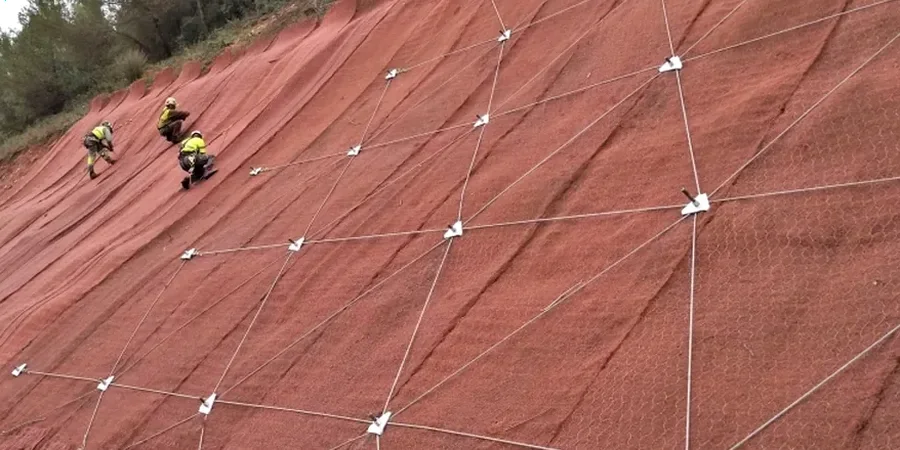
Technical reference image — West Valley City

Local geotechnical context

We often walk sites in West Valley City where a homeowner cut into a slope five years ago and now the fence is tilting twenty degrees. The problem is rarely the cut itself—it's the lack of drainage control behind the crest. Water ponds, saturates the backfill, and hydrostatic pressure builds silently until a rotational slide develops. Near the Jordan River corridor, abandoned gravel pits backfilled with uncontrolled fill create pockets of loose material that standard borings miss. A slope stability analysis without a proper groundwater monitoring plan is incomplete. We install vibrating wire piezometers and log readings through at least one wet season before finalizing design recommendations.

Need a geotechnical assessment?

Reply within 24h.

Email: info@geotechnicalengineering.sbs

Watch the video

Technical parameters

ParameterTypical value
Analysis MethodsLEM (Spencer, Morgenstern-Price), FEM where required
Minimum Safety Factor (Static)1.5 per IBC 2021 / ASCE 7-22
Seismic Coefficient (kh)Site-specific per USGS 2023 NSHM; typical 0.15–0.25g
Soil Parameters Testedc', φ', γ, permeability, consolidation
Groundwater ModelingSteady-state and transient seepage (SEEP/W or equivalent)
Report Turnaround5 business days standard; 48-hour rush available
Applicable StandardsIBC Chapter 18, ASCE 7-22 §11.8, Utah local amendments

Other technical services

01

Slope Stability Modeling

2D and 3D limit equilibrium analysis using Slide2, SLOPE/W, and PLAXIS for complex geometries. We model rapid drawdown scenarios for canals and detention basins, and assess seismic performance under the West Valley fault zone scenario.

02

Slope Instrumentation & Monitoring

Installation of slope inclinometers, piezometers, and survey prisms with automated data logging. We provide monthly displacement reports and trigger-based alert thresholds for active construction near West Valley City's Traverse Ridge area.

Applicable standards

IBC 2021 Chapter 18 – Soils and Foundations, ASCE/SEI 7-22 §11.8 – Seismic Earth Pressures, ASTM D1586 – Standard Penetration Test (SPT), ASTM D4767 – Consolidated Undrained Triaxial Compression Test, Utah Administrative Code R156-22 – Professional Engineers Licensing

Common questions

Does West Valley City require a slope stability analysis for my project?

Yes. West Valley City enforces IBC Chapter 18, which triggers a slope stability analysis for cuts or fills exceeding 12 feet in height, slopes steeper than 2:1, or any construction within 50 feet of a slope crest. The city's building department reviews geotechnical reports as part of the permit package. We coordinate directly with city reviewers to avoid resubmittal delays.

How much does a slope stability analysis cost in West Valley City?

For a typical single-family lot in West Valley City, the analysis ranges from US$1,420 to US$3,980 depending on slope height, required borings, and whether groundwater monitoring is needed. Complex subdivisions or commercial sites with cuts over 30 feet fall at the upper end or beyond due to additional lab testing and modeling time.

How long does the slope stability analysis take?

Fieldwork takes one to two days. Lab testing for shear strength runs five to seven days. The analysis and stamped report are delivered within five business days after lab results are complete. We offer a 48-hour rush option for projects on a tight construction schedule in West Valley City.

What soil parameters do you test for slope stability?

We run consolidated-undrained triaxial tests (ASTM D4767) for effective stress parameters c' and φ', direct shear on granular layers, Atterberg limits for expansive clays common in West Valley City, and consolidation tests to assess settlement. Permeability testing is included if groundwater affects the slope.
Location and service area

We serve projects in West Valley City and surrounding areas. More info.

View larger map