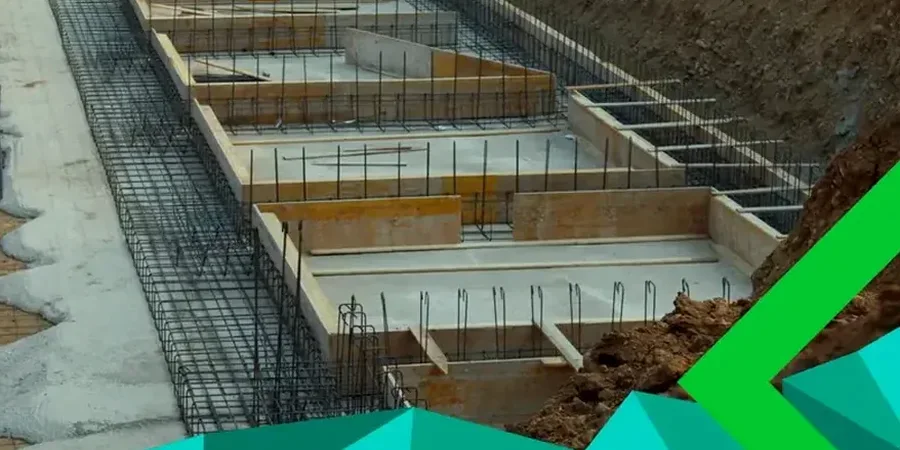
A three-story medical office building off 3500 South taught us a lesson we never forgot. The structural engineer had assumed a generic 2,000 psf bearing capacity based on a report from twenty miles east. We probed the site and found soft, compressible Lake Bonneville silts with an undrained shear strength barely half that assumption. The developer faced a choice: redesign the footings or risk differential settlement that would crack partition walls within two years. In West Valley City, where subsurface conditions change block by block, shallow foundation design is not a table lookup. Our team combines site-specific subsurface investigation with load-settlement analysis to size footings and mat foundations that work with the ground, not against it. When we drill through the upper crust into the lacustrine sequence that defines this valley, we're looking for the depth where competent bearing strata actually begin. On a recent warehouse project near the Decker Lake area, correlating CPT test data with lab consolidation curves let us justify a 3,500 psf net allowable bearing pressure, eliminating the deep foundation alternative entirely. That is what local expertise delivers.
In West Valley City's Lake Bonneville sediments, bearing capacity is rarely the limiting factor—differential settlement governs 80% of our shallow foundation design decisions.
Process and scope
West Valley City's geotechnical personality splits along an east-west gradient that reflects the ancient Lake Bonneville shoreline. East of 3200 West, you encounter stiffer Provo-level clays and silts with occasional sand lenses; west toward the airport, the profile transitions to thicker, more compressible clay deposits interbedded with clean sands. This variability is why our shallow foundation design methodology starts with targeted borings and shear wave velocity profiling before any bearing capacity calculation. For the Granger neighborhood, where homes built in the 1970s show classic distress patterns from expansive near-surface clays, we specify foundation depths below the active zone, typically 42 to 48 inches, and often recommend a capillary break layer. On the industrial corridor along 2100 South, we have designed continuous strip footings on engineered fill, verifying compaction with
sand cone density testing to ensure uniform support beneath slab-on-grade floors. We apply bearing capacity equations from Vesic and Meyerhof with partial factors consistent with ASCE 7, but the input parameters come from our own triaxial and consolidation tests on undisturbed samples. Settlement calculations use both elastic half-space methods and one-dimensional consolidation theory, cross-checked against CPT-based correlations.
Local geotechnical context
The most common error we see among contractors new to West Valley City is treating the entire site as uniform. They order one geotechnical boring, assume the log represents the whole parcel, and size all footings identically. Then the northwest corner of the building settles an inch more than the southeast, and the owner calls us to diagnose drywall cracks and sticking doors. Lake Bonneville depositional environments produce lateral facies changes over distances of less than 100 feet—sand channels cut through clay sequences, and compressible organic silts fill paleo-depressions. A single boring cannot capture this heterogeneity. The second error is ignoring construction-phase groundwater: perched water tables appear seasonally in sand lenses above the regional aquifer, and excavating into saturated soils without dewatering turns bearing surfaces to mush. Our design reports include explicit subgrade preparation specifications and recommend proof-rolling with a heavy compactor before steel placement. We also flag liquefaction potential in loose sands below the groundwater table, which can trigger bearing capacity loss even in shallow foundations if the seismic demand exceeds the soil's residual strength.
Common questions
How much does a shallow foundation design package cost for a commercial building in West Valley City?
For a typical commercial or industrial building in West Valley City, a complete shallow foundation design package—including targeted geotechnical borings, laboratory testing, bearing capacity and settlement analysis, and a stamped report—ranges from US$1,840 to US$3,150. The final cost depends on building footprint, number of borings required, and whether consolidation or triaxial testing is needed for the specific soil profile. We carry out a fixed-fee proposal after reviewing your site plans.
How deep do footings need to be in West Valley City to avoid frost heave and expansive soil problems?
The IBC requires a minimum footing depth of 30 inches for frost protection in this region, but our local practice places footings at 42 to 48 inches below finished grade in most West Valley City locations. This deeper embedment gets below the active zone where seasonal moisture fluctuations drive expansive clay volume changes. On sites with thick near-surface clay, we may recommend an additional 6 inches of granular base material below the footing to act as a capillary break and moisture buffer.
What soil conditions in West Valley City most affect shallow foundation performance?
The dominant factor is the Lake Bonneville lacustrine clay and silt sequence that underlies most of the city. These soils are moderately to highly compressible, with consolidation settlements that can continue for months after loading if not properly analyzed. Lateral variability is high—sand lenses and channel deposits cut through the clay profile, creating differential support conditions across a single building footprint. We also encounter perched groundwater in sand layers that requires careful subgrade management during construction. Our design approach addresses all three factors: compressibility through consolidation testing, heterogeneity through adequate boring coverage, and groundwater through drainage and dewatering specifications.