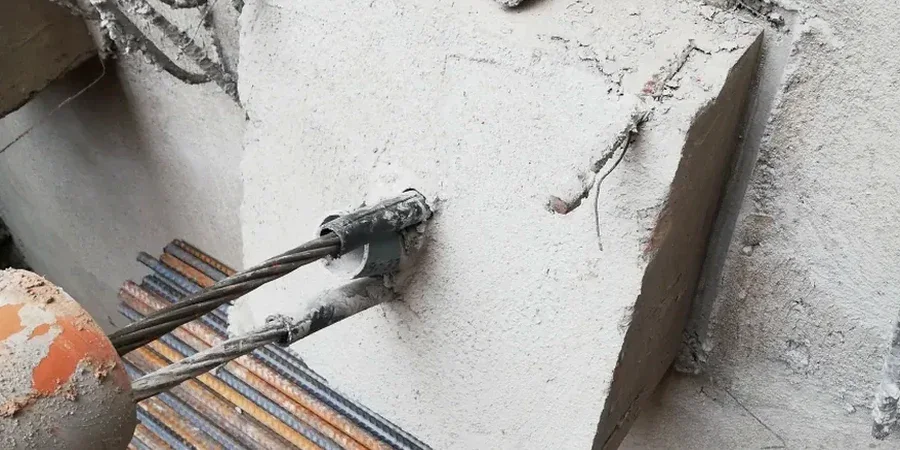
A few years back, we were called out to a multi-story project near the Valley Fair Mall expansion. The contractor hit groundwater at 18 feet and the shoring started to deflect. The original design assumed dry conditions—a common mistake on the east bench of West Valley City. We redesigned the support using a combination of active strand anchors for the upper silty clays and passive bar anchors socketed into the deeper gravels. In West Valley City, the soil profile transitions quickly from Lake Bonneville deposits to more competent alluvial fans, and that transition zone demands a flexible anchoring strategy. We don't just pump out calculations; we walk the site, verify the stratigraphy, and adjust the bond length based on what the drill rig actually pulls up. For deeper cuts, we often tie the anchor performance back to data from CPT testing to refine the grout-to-ground bond values.
In West Valley City, the difference between an anchor that holds and one that creeps often comes down to knowing whether you're in Lake Bonneville clay or a gravel lens.
Process and scope
West Valley City's development boom since the 1980s has pushed construction into areas that were once agricultural land on the margins of the ancient Lake Bonneville. That history matters for anchoring: the near-surface soils are often interbedded clays and silts with a high plasticity index, prone to creep under sustained load. Our anchor designs always start with a careful review of the Atterberg limits—before we even touch a load calculation, we check the
Atterberg limits to flag any expansive clay layers in the bonded zone. For active anchors, we specify multi-strand tendons with double-corrosion protection when the groundwater is aggressive, which is not uncommon in parts of West Valley City near the Jordan River corridor. Passive anchors, like fully grouted soil nails, work well in the stiffer Pleistocene gravels found at depth, but only if the installation sequencing is tight. We also verify the gravel's shear strength through
triaxial testing when designing for permanent retaining walls, ensuring the passive wedge develops as predicted and the wall face won't creep outward over time.
Local geotechnical context
The most frequent call we get from West Valley City is after a contractor has installed tiebacks without a pre-production load test. They drill, grout, stress to lock-off, and then a few anchors start losing tension. When we investigate, it's almost always a bond length issue—the grout column didn't penetrate the design stratum, or the hole collapsed in a silty lens and the bond was compromised. In West Valley City, skipping the sacrificial anchor test program is a gamble. The Lake Bonneville clays have variable shear strength, and a generic bond stress value from a textbook won't cut it. We've seen projects where three weeks of anchor restressing and additional drilling cost more than the entire geotechnical investigation. A proper test program, per ASTM D3689, verifies the creep rate and ultimate capacity before production anchors are installed, and that upfront cost is trivial compared to a shoring failure.
Common questions
What's the difference between an active and a passive anchor?
An active anchor is prestressed after installation—we apply a lock-off load with a hydraulic jack to immediately engage the soil mass. This keeps wall deflections minimal, which is critical next to existing structures. A passive anchor only develops resistance when the wall starts to move, so it works best in overconsolidated soils where small displacements are acceptable. In West Valley City, we typically use active anchors for cuts deeper than 15 feet and passive anchors for shallower soil nail walls.
How much does an anchor design cost for a project in West Valley City?
Our anchor design packages in West Valley City typically range from US$1,030 to US$4,100, depending on wall height, number of anchor rows, and whether a full-scale load test program is included. Smaller retaining wall projects fall on the lower end, while deep excavation designs with multiple anchor levels and corrosion protection detailing land closer to the upper end. Every quote includes construction-phase support.
How do you account for the corrosive soils near the Jordan River in West Valley City?
We require soil resistivity and pH testing from the site investigation. If resistivity drops below 2,000 ohm-cm or pH is outside the 5–10 range, we upgrade the anchor to Class I corrosion protection—fully encapsulated strand with corrugated sheathing and factory-grouted tendon. For permanent anchors, we don't take chances; double encapsulation is specified by default in aggressive environments.